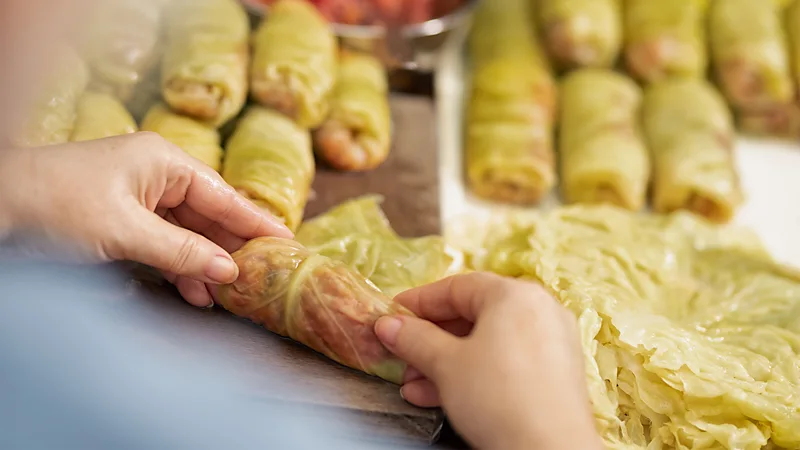
For Işın, the dish brings back memories of her mother-in-law and uncle-in-law, who helped her perfect the art of dolma-making when she first moved to Istanbul.
For Isabelle Fredborg, food writer at Swedish Spoon, the dish brings back memories of her grandfather, who once competed in a kåldolmar eating contest against a schoolmate. “They both managed to eat 12 kåldolmar before giving up,” she says with a smile. “By then, both were far too nauseous to continue.”
After centuries of crossing borders and adapting to new lands, dolma continues to do what it has always done best: bring people together and build a sense of belonging. Whether served at iftar during Ramadan, prepared for a Christmas feast or cooked for a family reunion, the message behind a plate of dolma remains simple and consistent – you are welcome and you are loved.
If you liked this story, sign up for The Essential List newsletter – a handpicked selection of features, videos and can’t-miss news, delivered to your inbox twice a week.
For more Travel stories from the BBC, follow us on Facebook and Instagram.