As the empire expanded between the 18th and 20th Centuries, dolma spread across borders, finding new homes in the Mediterranean, the Caucasus, the Balkans, Eastern Europe and the Middle East. Along the way, it took on new names and new identities.
Stuffed grape leaves became waraq enab in the Gulf, yaprakh in Kurdistan, yarpaq dolması in Azerbaijan and dolmades in Greece. Stuffed vegetables came to be known as mahshi in the Levant and Egypt. In colder regions, cabbage replaced vine leaves, giving birth to dishes such as gołąbki in Poland and sarmi in Bulgaria.
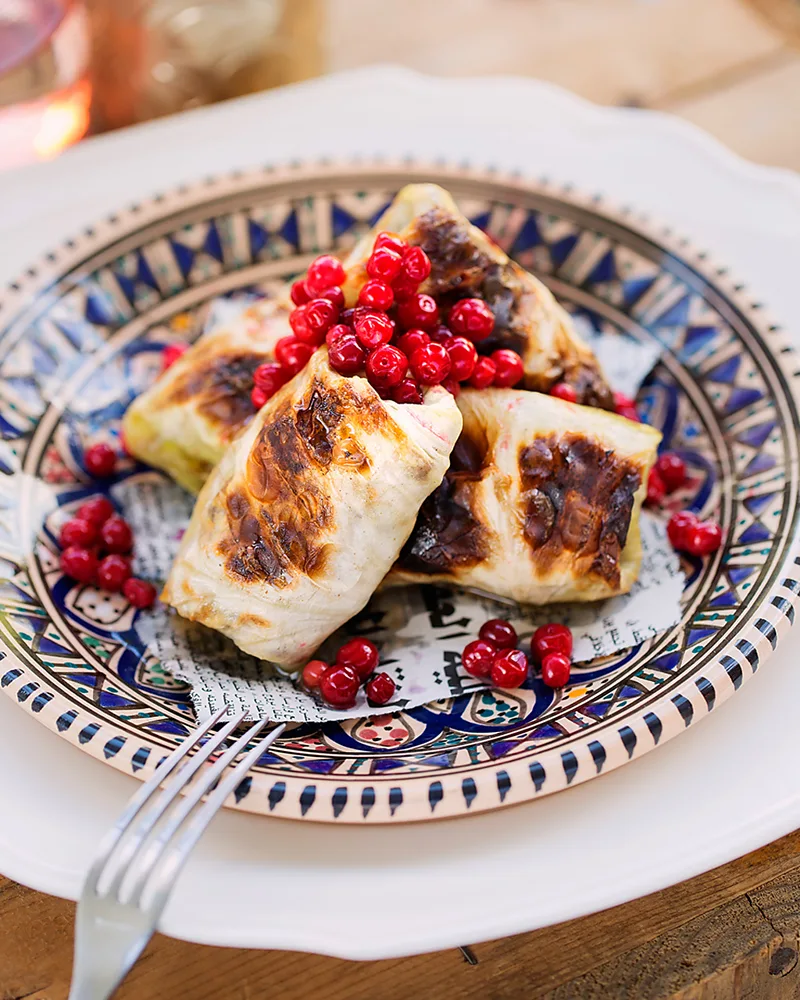
One of dolma’s most unexpected journeys took it as far as Sweden in the north. After losing the Battle of Poltava to Russia in 1709, Swedish King Charles XII spent five years in exile in Ottoman lands. He returned home with a taste for stuffed dishes and a retinue of chefs who created stuffed cabbage rolls and adapted them to local tastes, giving birth to the Swedish kåldolmar.
“We like our kåldolmar sweeter than Turkish dolma,” says Stefan Ekengren, chef, restaurateur and cookbook author. “Ours are often dressed with the ljus sirap – traditional Swedish syrup used for baking and flavouring – and served with lingonberries.”
To the east, dolma found a new home in India. Armenian merchants who settled in Kolkata in the 16th Century introduced the idea of stuffed vegetables to local kitchens. Bengali cooks took it a step further by filling potala – a pointy gourd native to the region – with fish, prawns, potatoes, poppy seed paste, raisins and cottage cheese, and cooking it in a fragrant curry. The result, potoler dolma, is a dish that evokes a million emotions in West Bengal.