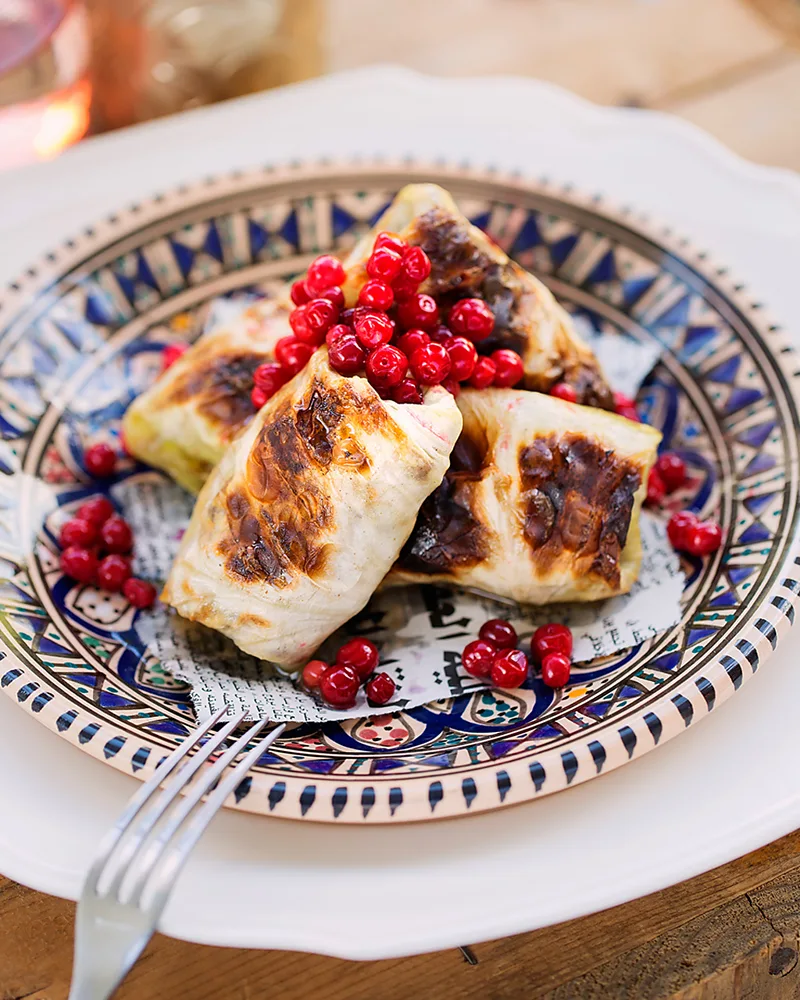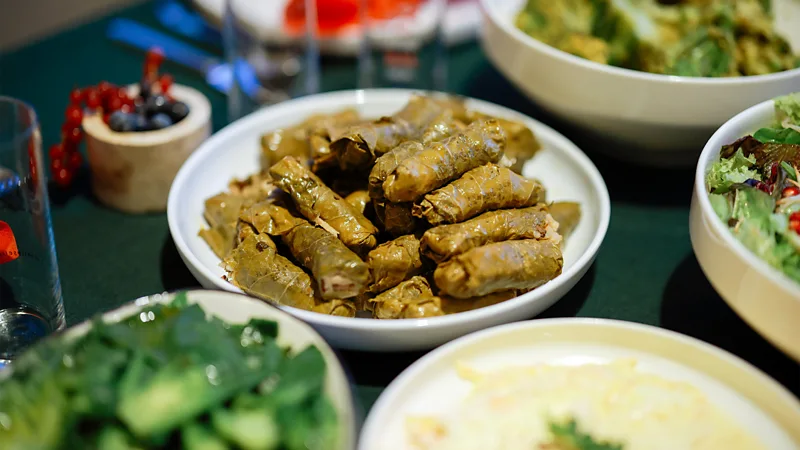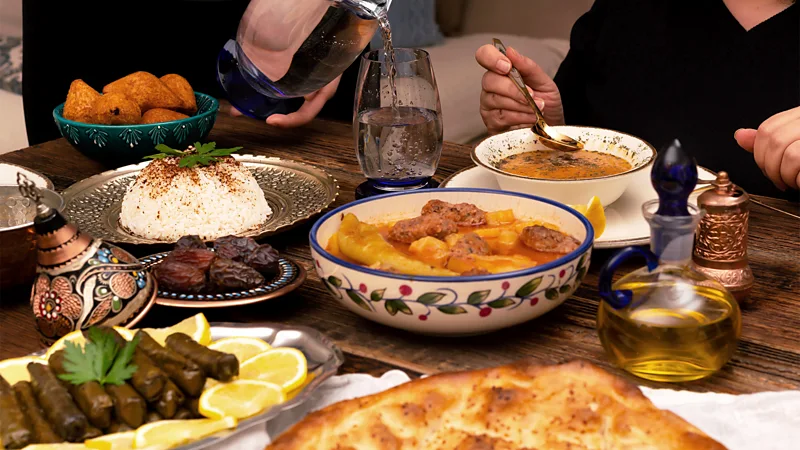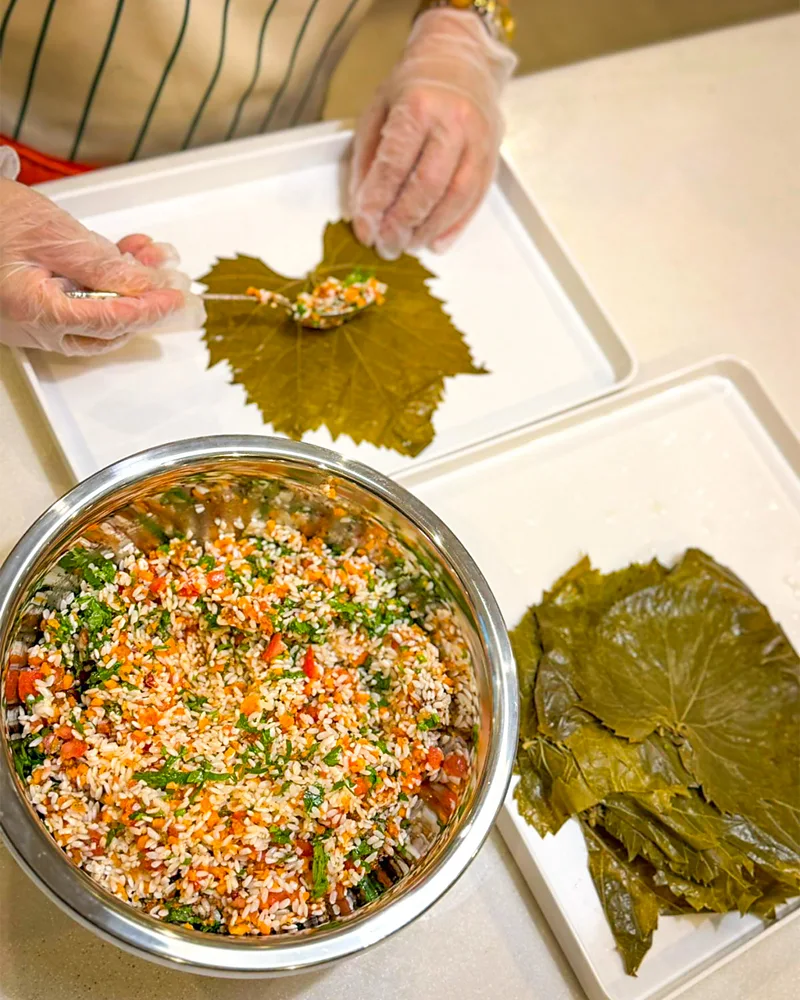
Dolma – named after the Turkish verb dolmak, meaning “to fill” or “to stuff” – refers to a broad family of dishes in which rice, meat, vegetables and spices are wrapped in pre-cooked leaves or stuffed into hollowed fruits and vegetables, and then baked, cooked or served as is. The concept is believed to have originated in the 15th-Century kitchens of the Ottoman Empire.
“The Ottomans really became obsessed with stuffing,” says Priscilla Mary Işın, author of Bountiful Empire – A History of Ottoman Cuisine. “Stuffing vegetables and animals was nothing new; people had done it for centuries. But between the 15th and 19th Centuries, everything from lamb, game birds and mackerel to onions, apples and vine leaves was stuffed. That gave rise to an extraordinary range of dolma dishes.”
Religious practice played a key role in shaping that obsession. The empire was home to large populations of Byzantine Christians, who fasted for nearly 180 days a year and followed dietary rules that prohibited the consumption of animal products. “Stuffed leaves and vegetables became increasingly common during this time,” Işın explains, as cooks found creative ways to make filling meals without meat.
Innovation was also driven by the imperial court. The establishment of Matbah-ı Âmire, or the palace kitchen, created a highly competitive environment where cooks constantly experimented with flavours and techniques to impress the Sultan and his council. The sheer size of the Ottoman Empire further accelerated this creativity. Stretching from Algeria in the west and Vienna in the north to the Persian Gulf in the east and Yemen in the south, it connected vastly different geographies and agricultural traditions. “Vegetables from across these regions flowed into Istanbul’s kitchens, where they were hollowed out, filled and reimagined,” says Işın.
The pace of innovation was so intense that food historian Charles Perry later described it as a “creative explosion of dolma recipes” across the empire.
By the 17th Century, dolma had become both a beloved dish and a marker of status. “Rich men and high-ranking state officials began employing specialist ‘dolma’ cooks,” says Işın. “And dedicated dolma restaurants started cropping up in Istanbul around this time.”
Its association with festive occasions developed gradually. Rice, a key ingredient in dolma fillings, was considered a luxury in Ottoman cuisine and was often reserved for the elite. Over time, rice-based dishes such as pilaf and dolma became closely linked to special meals, including those of Eid and Ramadan evenings, signifying abundance and celebration.